

20
Aug
2025
Hard hats and permits matter. But so do bedtime voices, lunchbox notes, and well-timed texts. This guide reframes workplace safety through the home—because the spouse, parent, or partner can be the decisive “last layer” that keeps a worker focused, rested, and confident enough to speak up.
Why families are part of the safety system
Most major incidents aren’t caused by missing paperwork—they happen when human attention slips: distracted, exhausted, or silently struggling. Families shape that mental state more than any policy does. Your messages, routines, and boundaries can clear a loved one’s mind—or crowd it.
Thought‑provoking question: What’s one simple thing you can do tonight that makes tomorrow’s shift safer?
1) Distraction: the most dangerous tool is in the pocket 📱
In 2008, a Metrolink engineer missed a red signal while texting; the head‑on collision killed 25 people. Investigators found no mechanical failure—just a fatal lapse in focus moments after sending personal messages.
What families can send (and avoid):
- ✅ “Stay sharp. Come home safe.” / “We’re proud of you—one step at a time.”
- ❌ “We need to talk. I’m done!” / “So you’re ignoring us now?” / “Call me ASAP about bills/school/house…”
Quick family rules: Delay arguments or heavy news until after shift; teach kids to send short safety wishes; use one steady pre‑shift phrase every day.
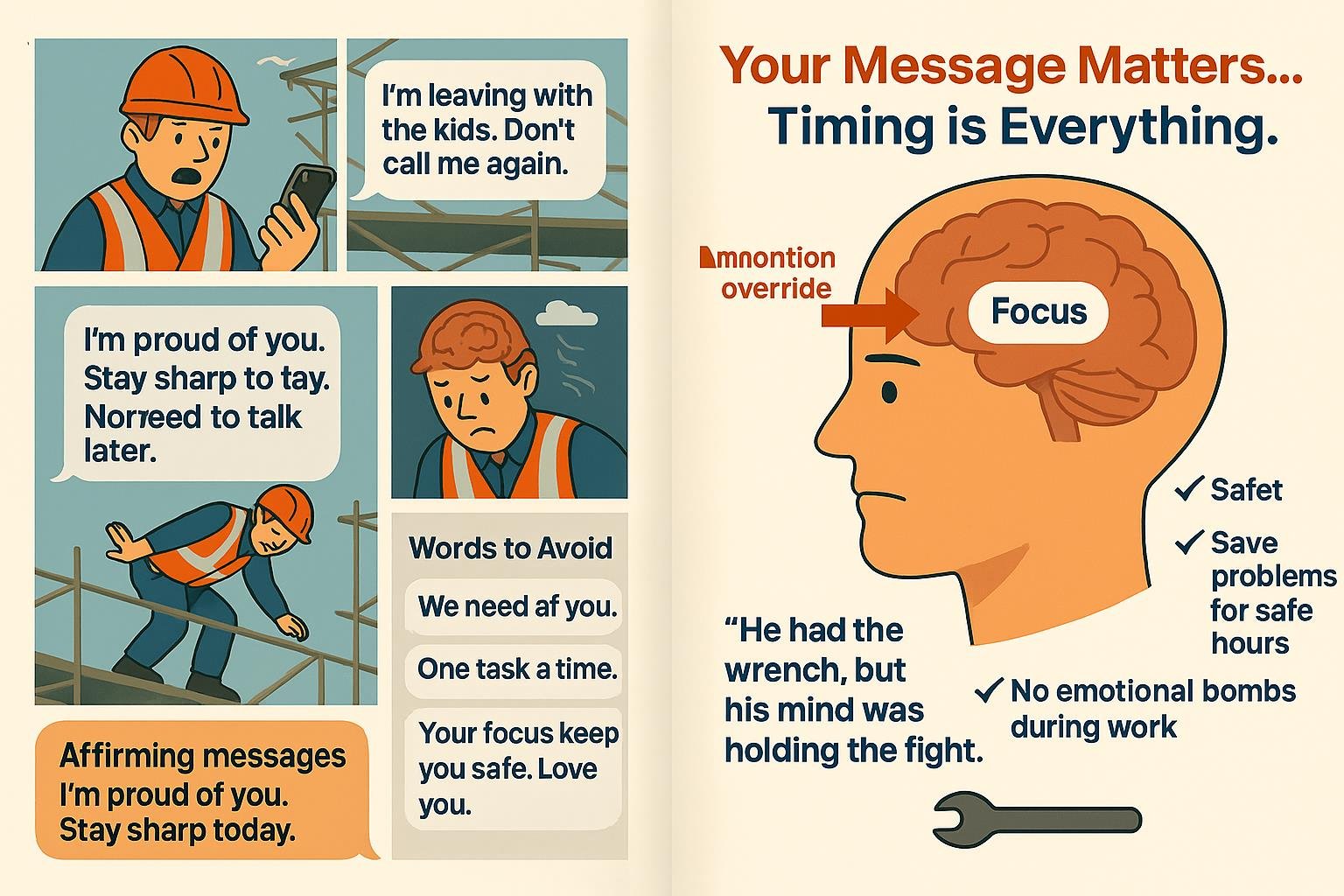
Reflection: If a text popped up during a critical lift or LOTO, would it help them focus—or pull them off the task?
2) Fatigue: the quiet amplifier of risk 😴
Fatigue isn’t laziness—it’s neurological impairment that slows reaction time, blunts attention, and fuels errors. Studies estimate ~13% of work injuries are tied to sleep problems; workers with sleep issues have 1.62× higher injury risk. Families can be powerful fatigue‑reducers: protect sleep windows, avoid heavy conversations on shift days, and become “rest guardians.”
NIOSH highlights how shiftwork and long hours degrade alertness; build routines that counter those effects (quiet zones, planned breaks, hydration).
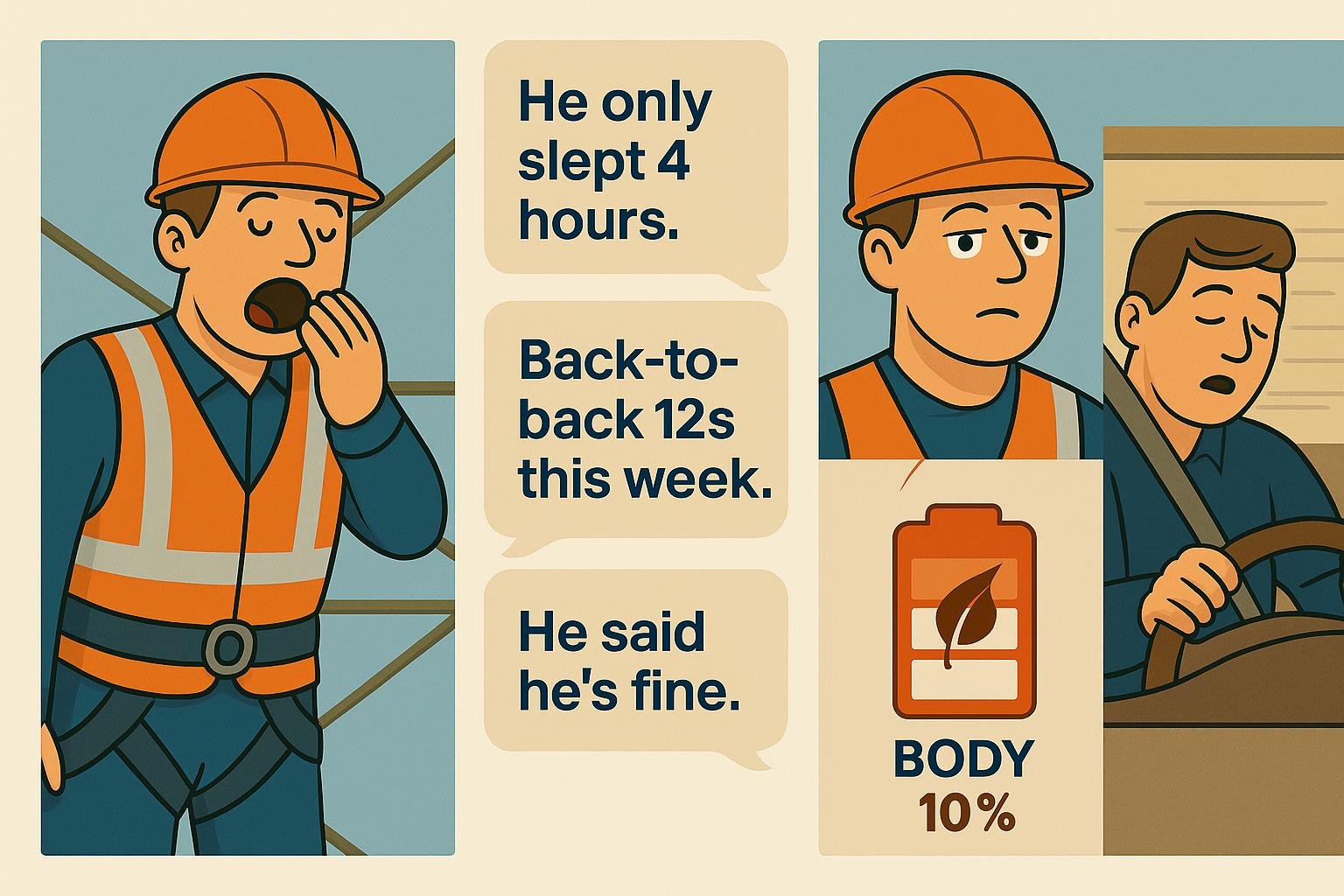
Reflection: Where could your family trade five minutes tonight for a safer decision tomorrow?
3) Incompetency (really: unspoken uncertainty) 🗣️
Experience isn’t competency. What saves lives is knowing this procedure, this hazard profile, and when to stop and ask. Pride, fear, and “just get it done” culture often keep people silent. Families can normalize questions and remove the shame of not knowing yet.
Try these prompts at home:
- How comfortable are you with tomorrow’s job?
- What would you ask your supervisor to be extra sure?
- Text me if you feel rushed—I’ll back your decision to pause.
Reflection: Which question, asked tonight, might give them permission to speak up tomorrow?
4) Love as the final layer 💙
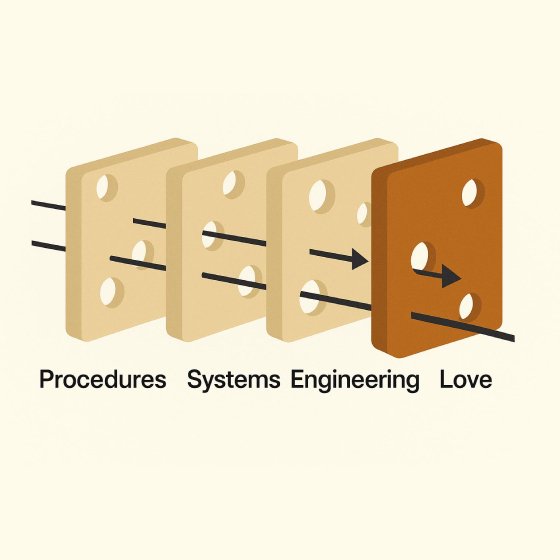
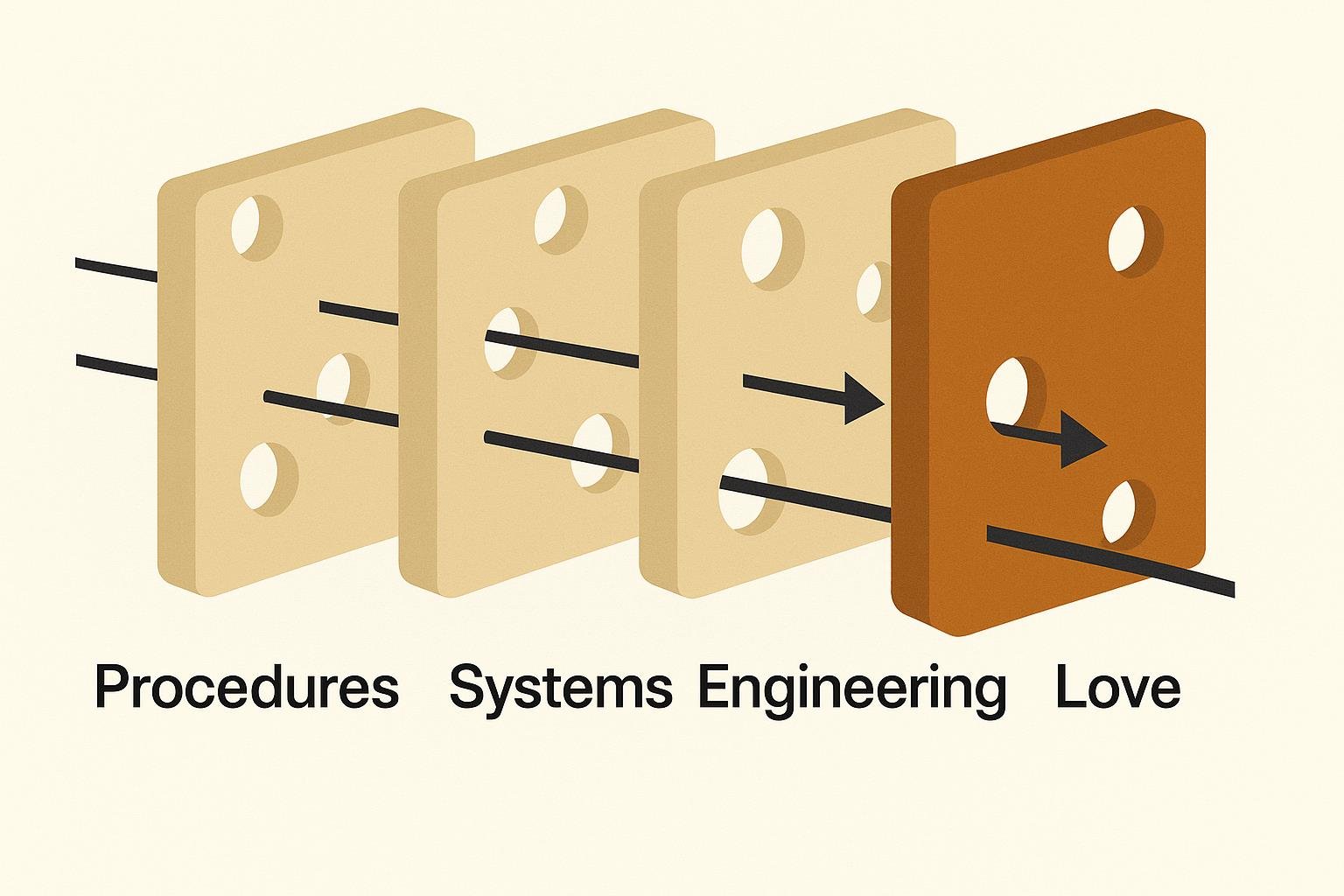
Think “Swiss‑cheese model”: many barriers must align to stop failure; love can be a real barrier—through reassurance, boundaries, and practical support.
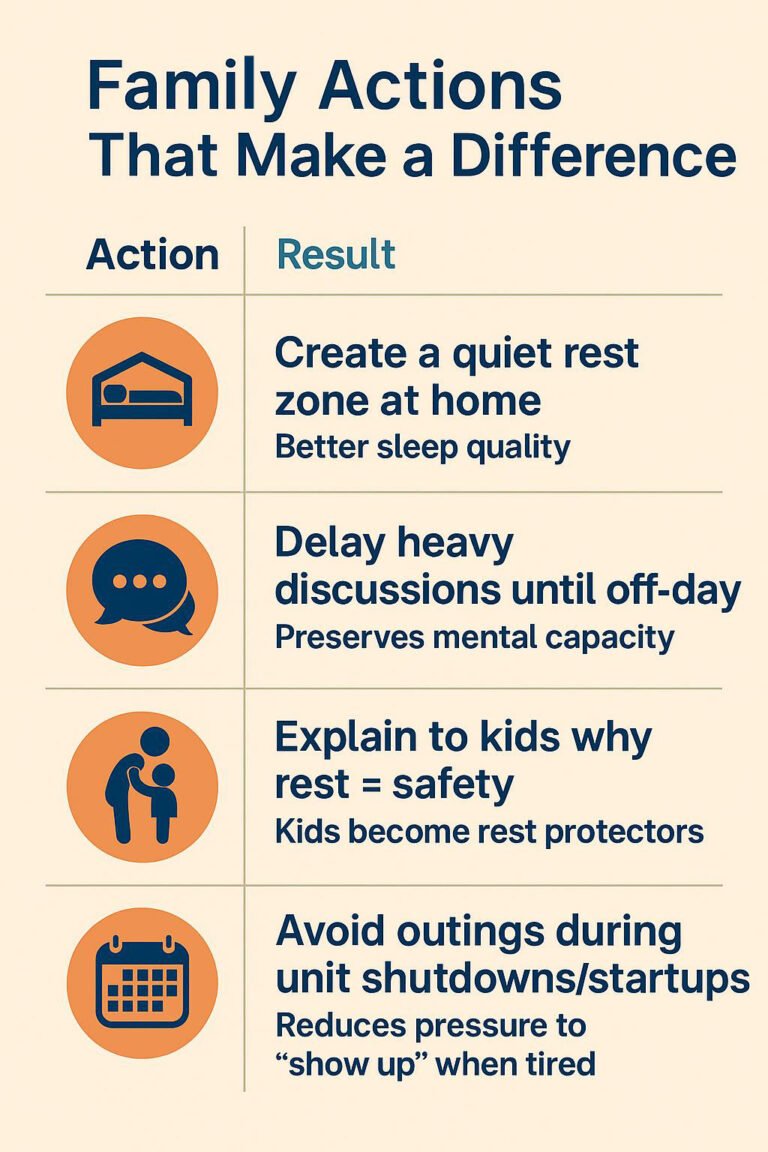
The Love Layer checklist:
- Repeat one calming phrase pre‑shift.
- Send a 10‑sec voice memo: “You’ve got this.”
- If upset: “Let’s talk when you’re home safe.”
- Guard sleep: quiet hours, fewer obligations on shift weeks.
- Schedule heavy talks for safe times.
Reflection: What’s one boundary you’ll set this week to protect their focus and rest?
Why this matters beyond one household
Lockout/Tagout, fall protection, and line‑of‑fire controls save lives—but only when people are clear‑headed enough to use them and confident enough to verify them. That is why the home layer matters: it supports attention, rest, and the courage to speak up.
Conversation starters (share yours)
- What personal goal are you protecting this week—and which safeguard guards it best?
- Where does paperwork still feel like a hurdle, and how could we redesign it to make the right action the easy action?
- What’s your most useful near‑miss story—and what changed because of it?
Sources & further reading
- Your manuscript: How to keep your spouse and loved ones safe at work.
- NTSB: Metrolink Chatsworth collision (2008) — mobile phone distraction.
- NIOSH/CDC: Fatigue, shiftwork, and long hours resources.
- NSC: Sleep problems and workplace injury risk.
- OSHA: Control of Hazardous Energy (Lockout/Tagout) overview and standard.
- Swiss‑cheese model primers and explainers (Reason).